



Broadcast vs Print vs Online: Comparing UK News Sources for Trainee Journalists
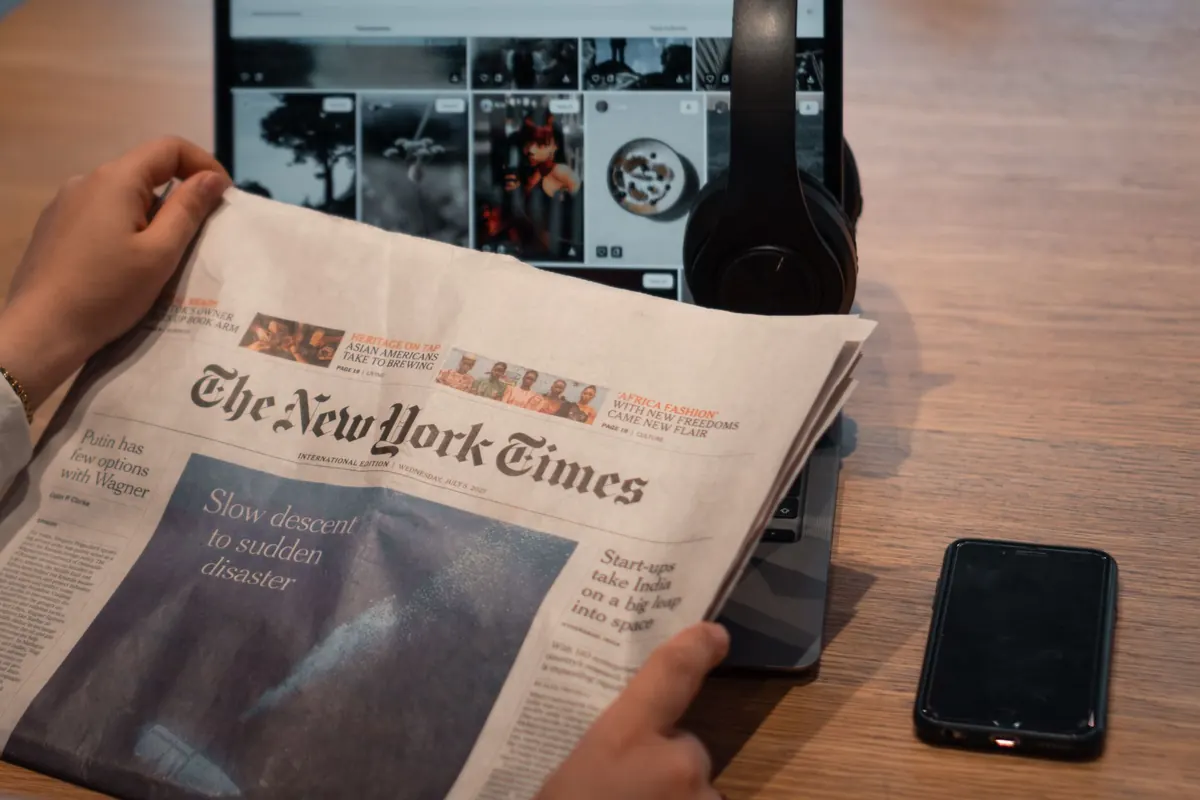
A trainee on a Devon weekly and a trainee on a rolling news channel can cover the same council meeting and file copy that barely resembles each other. That is not a failure of either one. Print, broadcast and online news run on different clocks, apply different tests to the word "confirmed", and write for audiences who are reading, listening or half-watching on a phone in a bus queue. Understanding those differences is what turns a competent reporter into someone who can be dropped on any desk and survive.
Three clocks, three deadlines
Print works to a production schedule. On a regional daily, the news conference might be at 10am and the first-edition deadline at 4pm, with sub-editors needing time to cut your copy, check the names and write the headline. File late because you were waiting for one more quote and your 500-word story becomes a 300-word brief, or gets held over entirely. Train yourself to file clean copy with the best material at the top, plus a shorter version you can offer if space collapses.
Broadcast back-times from the cue. A 6pm bulletin is built in reverse: the presenter's link, the reporter's package, the interview clip, the weather. A package might run ninety seconds, which is roughly 220 words of script once you allow for soundbites and pauses. Your carefully written intro may be rewritten at 5:50pm because a press conference overran. Write to pictures, to time, and to a producer who will cut you.
Online never closes. A live blog on a fire or a travel disruption publishes what is verified now and updates as it changes: road closures, casualty numbers, a statement from the ambulance service. There is no word count, which is both the joy and the trap. The first version of a story is the one people screenshot, so the pressure is to be fast and safe.
Verification: what counts as confirmed
The core discipline is identical across all three formats: do not publish a claim you cannot stand behind. The difference is how much time you get to stand behind it.
In print, the two-source habit is drilled in early, along with documentary evidence — the planning application, the court list, the freedom of information response. You have hours, sometimes days, so you write to the council on Monday and chase on Tuesday, and a right of reply sits comfortably in the copy. In broadcast, due accuracy and due impartiality are enforced by the regulator, and the practical effect is that you attribute carefully on air: "police say" rather than "police confirmed", unless they genuinely have. Live two-ways with a presenter leave no room for a correction thirty seconds later, which is why reporters rehearse the one line they are certain about.
Online, verification is squeezed. User-generated footage needs its original source found, its location checked against landmarks and its timestamp compared with other posts. Aggregating someone else's exclusive and rewording it is not reporting. If you cannot verify a claim, attribute it plainly and say what remains unconfirmed. Media law on defamation, contempt and privacy applies to a tweet exactly as it applies to a front page — the speed of publishing changes nothing except your exposure.
Writing for the eye, the ear and the thumb
Print: for the eye
Sentences can be longer and more structured because readers can go back. Quotes usually appear high, the top line carries the headline, and the standfirst sets the tone. You can carry nuance, background and a proper chronology.
Broadcast: for the ear
One idea per sentence. Active voice. Present tense where it is accurate. Numbers rounded so a listener catching half of it still gets the meaning. Read your script aloud: anything you stumble over, a viewer will miss. Avoid strings of unfamiliar names and never rely on "as we reported earlier" without reminding the audience what that was.
Online: for the thumb
Front-load the point. Keep paragraphs to two or three sentences. Use subheadings, bullets and a clear top line so someone skimming on a phone still leaves with the story. Write a straight headline for search and a separate, warmer line for social. Put the context high; most readers will never scroll past the first screen.
Side-by-side at a glance
- Deadline: print — scheduled editions, hours of notice; broadcast — minutes, back-timed from the bulletin; online — continuous, with updates expected.
- Verification: print — two sources, documents, right of reply; broadcast — due accuracy, due impartiality, tight attribution; online — rapid checking of images, posts and statements, with anything unverified labelled.
- Length: print — set by the page and the sub; broadcast — set by the clock; online — as long as it stays useful.
- Corrections: print — in the next edition; broadcast — on air, quickly; online — visible and timestamped, not silently rewritten.
- Best habit it teaches: print — accuracy and structure; broadcast — clarity and discipline; online — speed and audience awareness.
What each format gives you
Print teaches you to build a story that holds for 800 words and to respect a sub-editor's red pen, which is the fastest editing course you will ever take. Broadcast teaches you to find the one sentence that matters and say it without waffle. Online teaches you to judge what an audience is asking and answer it in the first three lines.
The reporters who move easily between desks are the ones who borrow from all three: the print reporter who front-loads, the broadcast reporter who checks a document, the online reporter who reads a script aloud before filing.
Practising across all three
You do not need a newsroom to build these muscles. Take one story you have covered and file it three ways.
- Write the print version: 400 words, quote high, headline and standfirst on top.
- Cut it to a 45-second broadcast script, roughly 110 words, and read it aloud with a stopwatch.
- Rewrite the opening three lines for a phone screen, then add three bullets a reader could scan in ten seconds.
- Keep a running verification log for each story: what you saw, what you were told, by whom, and what you could not confirm.
- Start a contacts book now — council press office, police media desk, ambulance service, the local campaign group — and note who answers on a Sunday.
Do that consistently and the formats stop feeling like separate jobs. You will know, before you sit down, whether you are writing for someone turning a page, listening in a car or scrolling on a bus — and that single decision shapes everything that follows.
Photo: Beyzanur K. / Pexels